EN
EN CN
CN
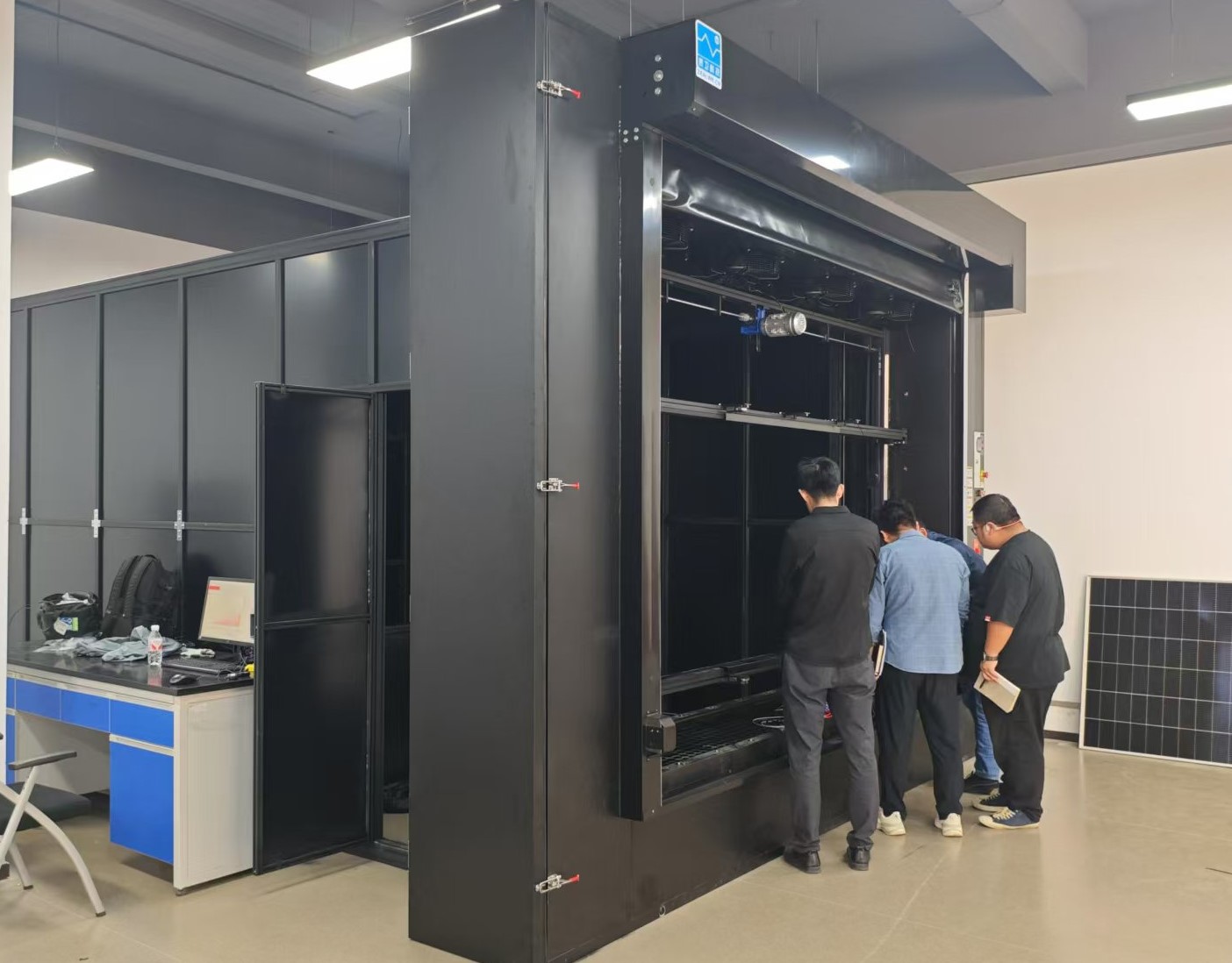
Inside the Panfile Module Temperature Control Chamber
Product description
Specifications
Download
In photovoltaic module temperature coefficient testing, the real challenge is never simply setting the chamber to 75°C.
The challenge lies in holding the temperature condition steady at the exact moment data is captured.
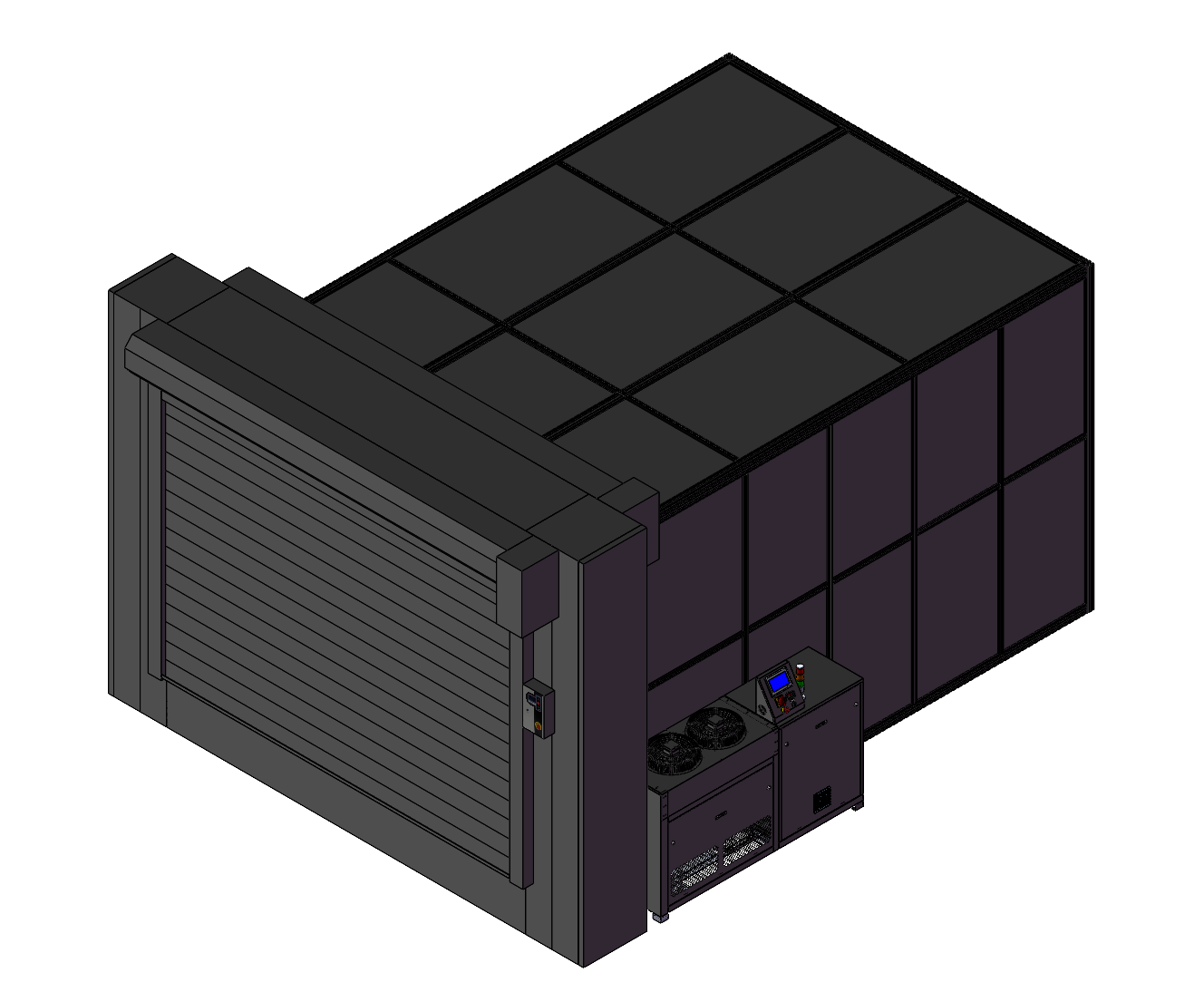
For large-format modules, reaching the target air temperature inside the chamber does not automatically mean the module temperature is uniform. Whether stable and repeatable measurements can be achieved depends on temperature uniformity, stability windows, and how disturbances are managed during sampling.
In module testing, temperature is not just an environmental parameter. It directly reshapes the I–V curve.
Changes in temperature affect key electrical values such as open-circuit voltage (Voc) and maximum power (Pmax). If temperature conditions are unstable, it becomes impossible to determine whether data variations originate from the module itself or from the test environment.
For this reason, temperature control must be evaluated from two perspectives:
Spatial consistency: whether temperature differences across the module surface converge at the same moment
Temporal consistency: whether temperature remains stable within a defined window and recovers quickly after disturbances
Transient module testing captures the I–V curve by exposing the module to simulated irradiation for a very short duration. Its value lies in reproducing near-real operating conditions while enabling rapid, standardized comparison across different modules or batches.
However, transient testing is extremely sensitive to conditions at the exact moment of measurement. Uniformity, stability windows, door-opening disturbances, and timing control are often more critical than the displayed temperature itself.
Common “False Compliance” Scenarios
In practice, discrepancies between chamber air temperature and actual module temperature typically arise from three factors:
High thermal mass of modules, which causes delayed temperature response
Uneven heat transfer, where airflow distribution creates surface temperature differences
Inconsistent boundary conditions, such as edge losses, fixtures, cables, and shading effects
These factors often result in misleading “pass” conditions: air temperature appears compliant while module surface temperature remains inconsistent, stabilization is slow after disturbances, or test repeatability degrades with minor setup changes.
Uniformity and Stability Are Not the Same
Uniformity refers to spatial temperature consistency at a given moment.
Stability refers to temporal consistency once the target is reached, including recovery behavior after disturbances.
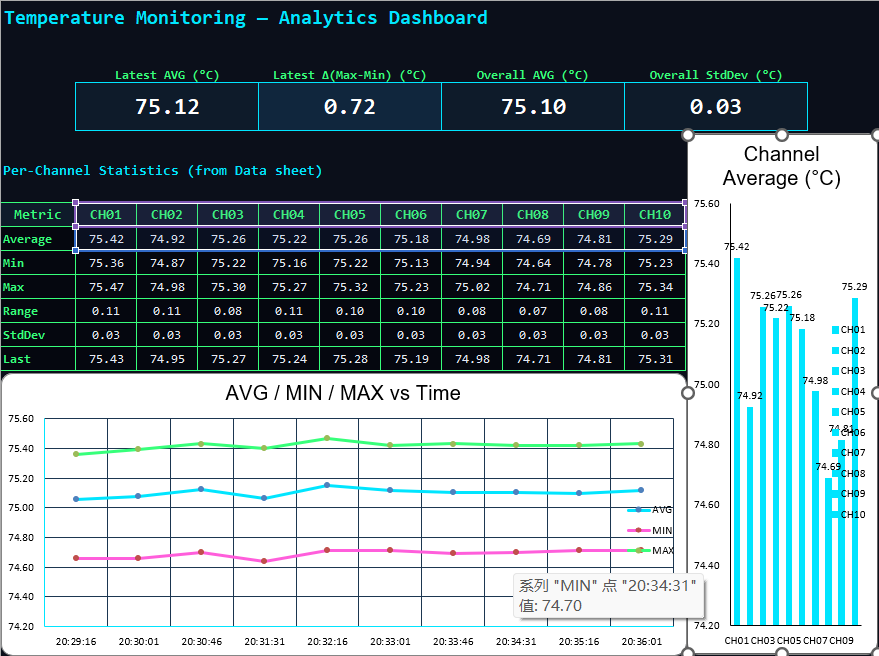
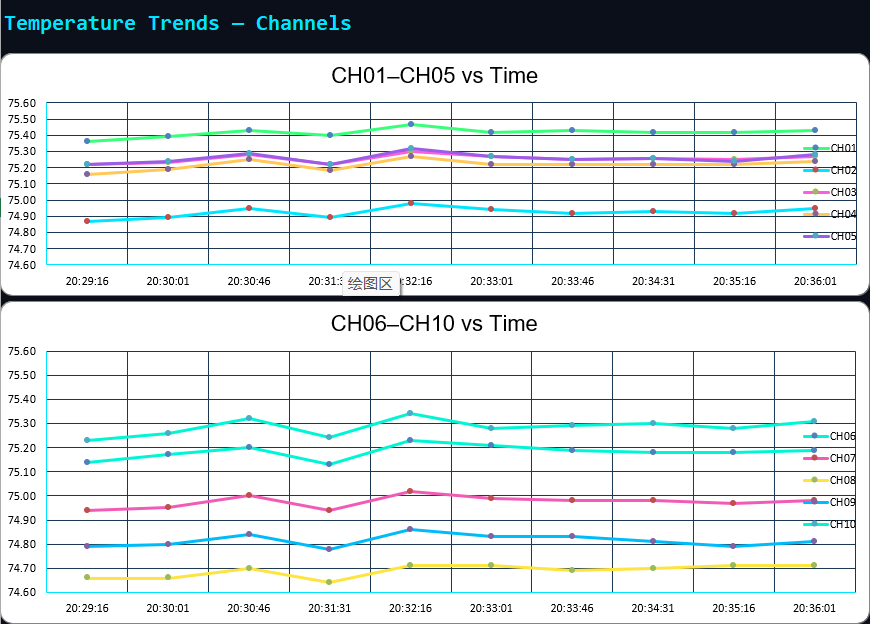
During commissioning, trend alignment across multiple measurement points is often more meaningful than absolute temperature differences. When trends are synchronized, airflow coverage and control logic are working as intended. When they diverge, apparent compliance may be coincidental.
Airflow Direction as the Core Control Variable
Uniformity issues are often mistakenly addressed by increasing airflow volume. In reality, the main limitation is usually airflow short-circuiting—supply air returning too quickly without fully covering the module surface.
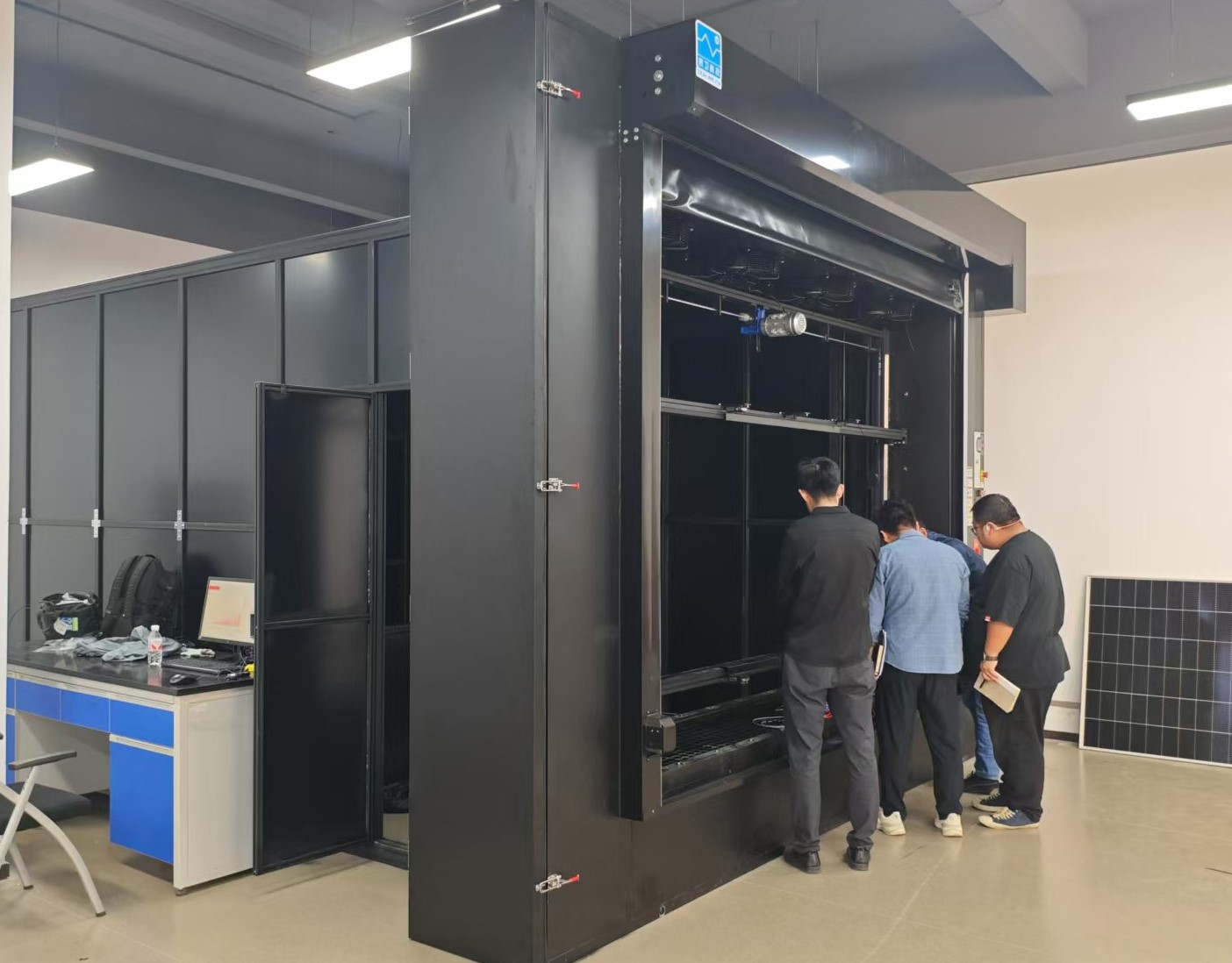
The Panfile chamber adopts a dual-channel airflow structure. The objective is not simply symmetry, but enforcing defined airflow paths so that supply and return flows follow the intended route.
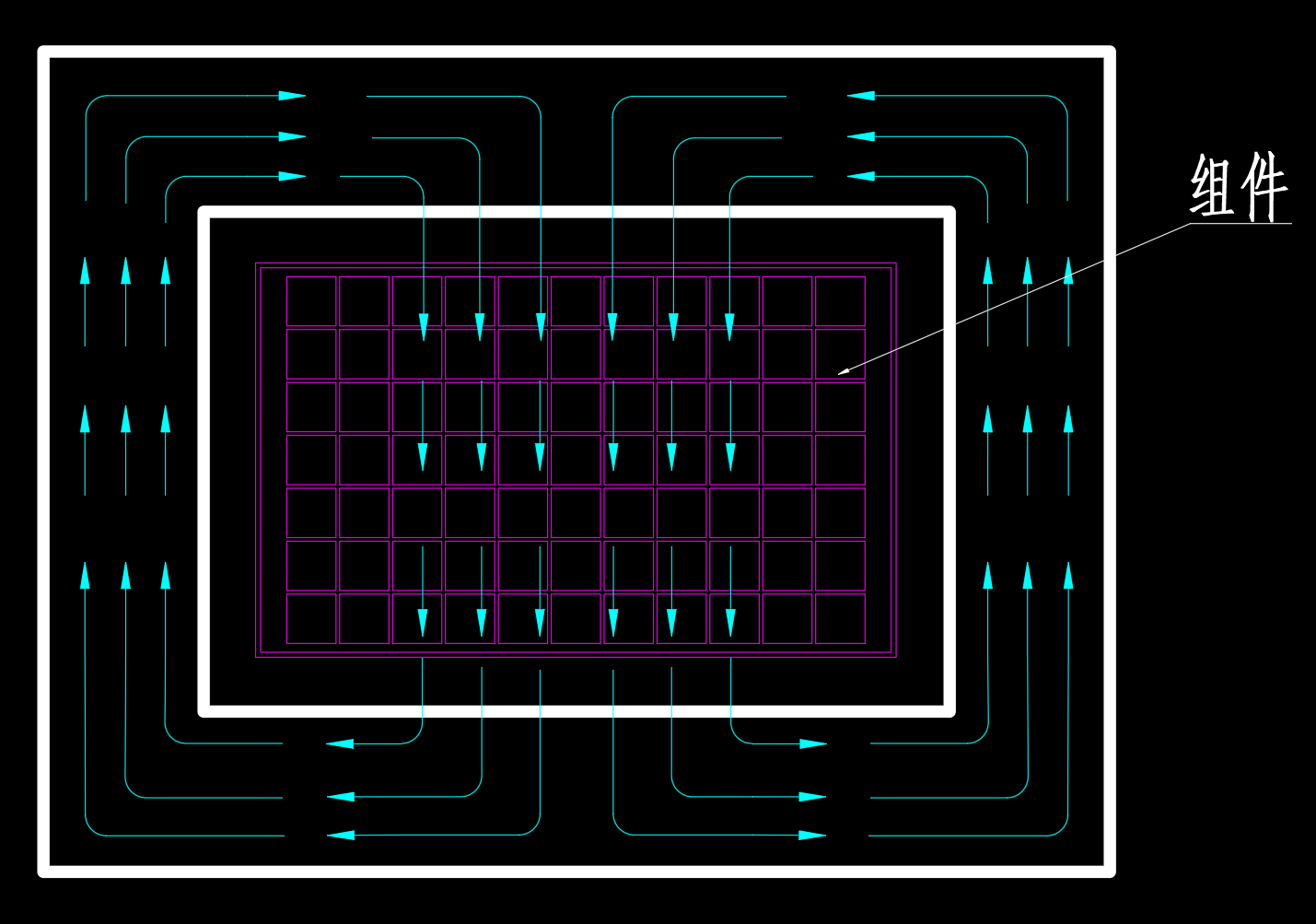
A differential pressure plate further stabilizes airflow direction. By creating controlled pressure gradients, it prevents shortcut flow paths, compensates edge zones, and makes airflow behavior predictable and tunable.
Disturbance Resistance by Design
Each airflow channel is equipped with dual axial fans in series, providing high-volume coverage while maintaining stability under disturbance. The focus is not on peak airflow figures, but on ensuring that door openings, fixture changes, cable routing, or module thermal mass variations do not disrupt airflow integrity.
Multi-Point Validation as the Acceptance Criterion
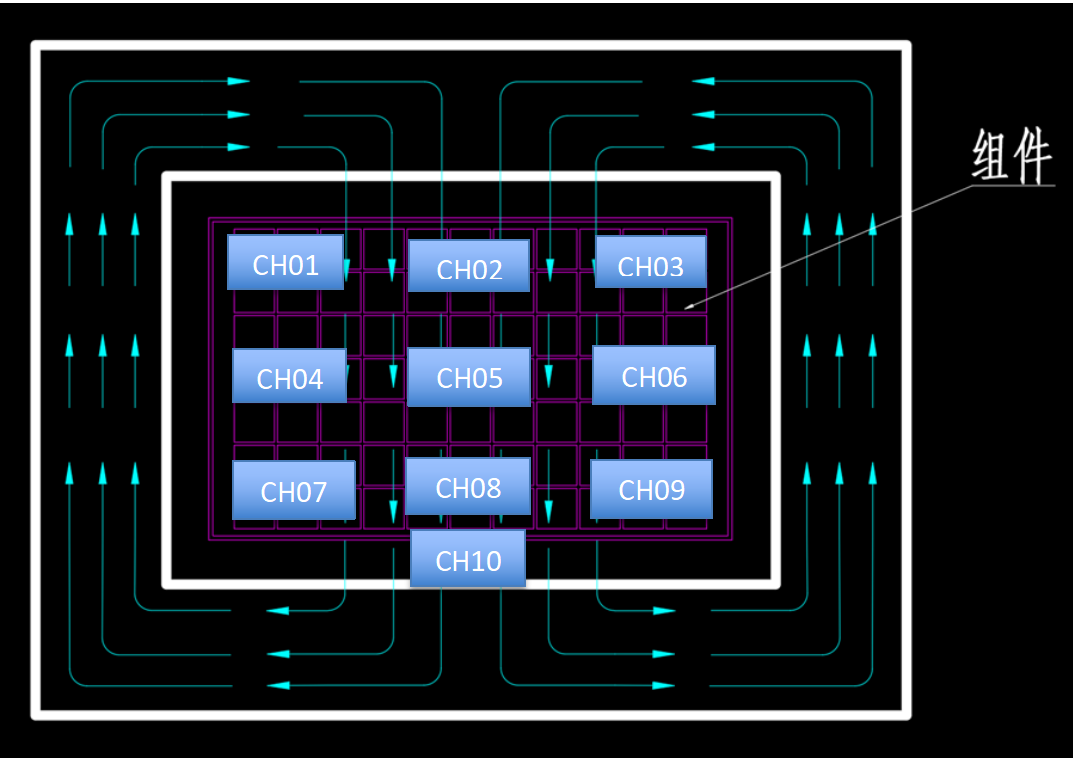
During commissioning, multiple temperature measurement points are used to verify:
Trend consistency across locations
Recovery time after disturbances
Edge-point tracking performance for large modules
Typically, 9 to 10 measurement points are distributed across the module surface to ensure that uniformity and stability are achieved simultaneously.
Timing Control for Transient Sampling
Transient testing requires not just stable temperature, but stable temperature at the sampling moment.
Measurements are therefore executed only after a confirmed stability window, rather than immediately upon reaching the setpoint.
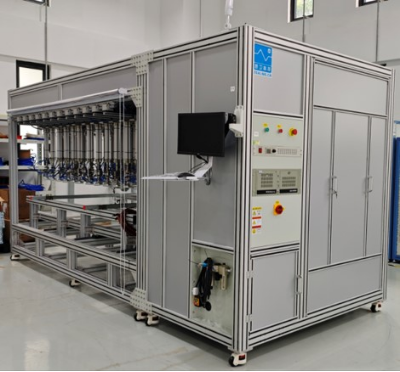
The system integrates the temperature chamber, transient solar simulator, optical enclosure, and a fast roll-up door with approximately 2-second opening time. The sequence is fixed: temperature condition verified, stability window confirmed, door opens, transient sampling executed, door closes, and recovery begins.
By confining disturbances to a consistent and repeatable time window, test repeatability is significantly improved.
PLC Interlocking for Process Consistency
High repeatability requires consistent conditions, actions, and acquisition timing.
PLC-based interlocking ensures that sampling is only executed when all conditions are satisfied. Abnormal states interrupt the process automatically, and system states remain traceable for diagnostics.
Closing the Loop: Engineering for Repeatability
In transient module testing, optical parameters are often emphasized. While important, real-world testing reliability depends equally on temperature conditions and timing control.
The Panfile temperature control system integrates airflow design, fast-door disturbance management, and PLC sequencing into a unified engineering system. The goal is not to achieve a single impressive result, but to ensure that every test follows the same logic: conditions verified, timing fixed, disturbances controlled, and results repeatable.
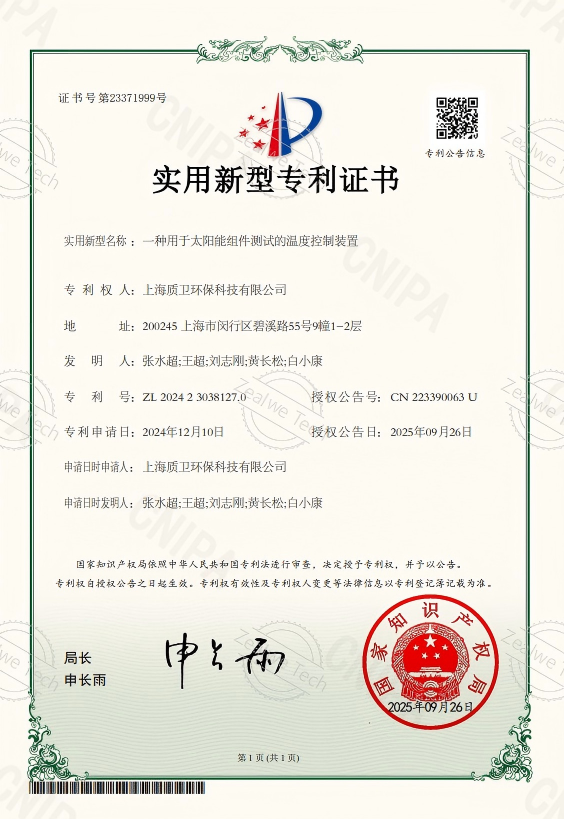
This approach has been formalized into a patented temperature control structure for photovoltaic module testing, enabling consistent replication and long-term operational stability.
- File name Release date Ooperating
New Product